Inside Palazzo Fendi Milano, The Flagship Defining Fendi’s Centennial
Six months after opening its doors on Via Montenapoleone, Palazzo Fendi Milano has established itself as one of the most distinctive luxury retail destinations in the city. Created to mark the house’s centennial year, the flagship reflects Fendi’s evolving vision of modern retail: part boutique, part cultural space and part working atelier where craftsmanship remains visible.
“The Fendi story is a female one,” Silvia Venturini Fendi has often said. That narrative sits at the centre of the Milan flagship. Windows wrapping the building pay tribute to the women who shaped the maison, beginning with founder Adele Casagrande Fendi and continuing through her five daughters, whose postwar leadership helped transform the Roman fur and leather workshop into a global fashion house. The display traces the house’s creative evolution, from Adele’s beginnings in 1925 through the era defined by Karl Lagerfeld and into the present day.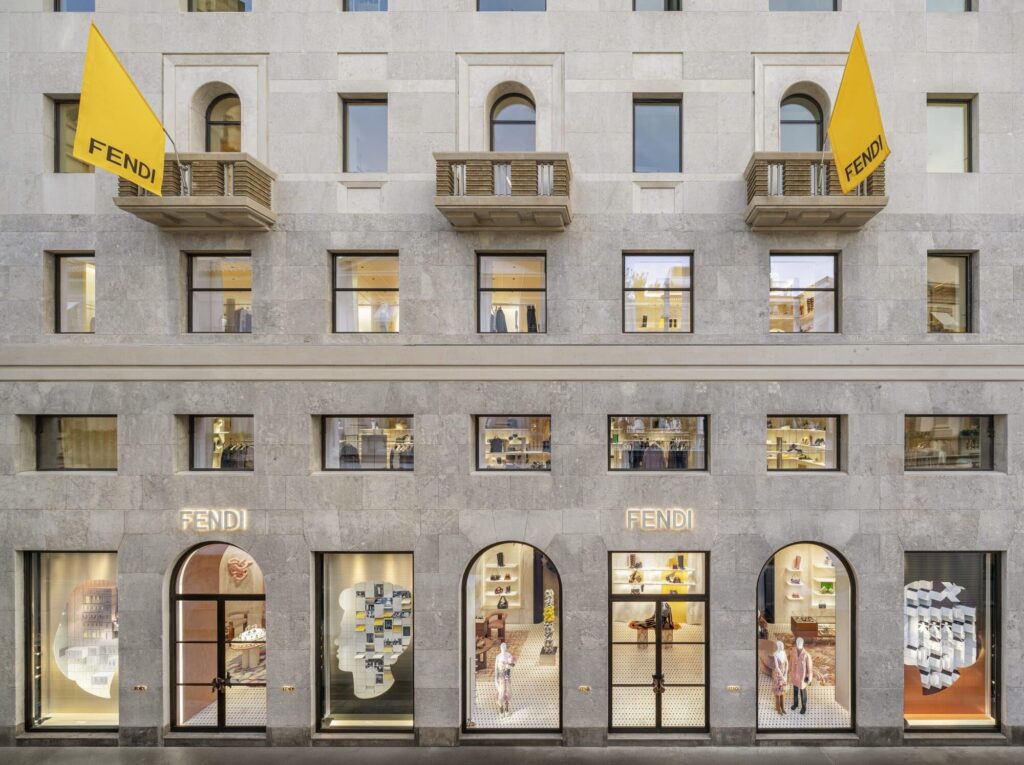
The flagship itself occupies a historic rationalist building designed by architect Emilio Lancia between 1933 and 1936. Carefully restored and reimagined, the space now spans 910 square metres across four floors. Alongside the boutique, the upper levels house three Langosteria dining concepts, reinforcing the address as a destination that blends fashion, culture and hospitality within Milan’s most prestigious shopping district.
Architecturally, the project balances preservation with subtle contemporary intervention. Lancia’s original arches and squared windows remain intact, while new details introduce Fendi’s house codes. Discreet logo work appears throughout the façade, and the sculptural door handles echo the fluid movement of leather, referencing the maison’s long standing expertise in craftsmanship.
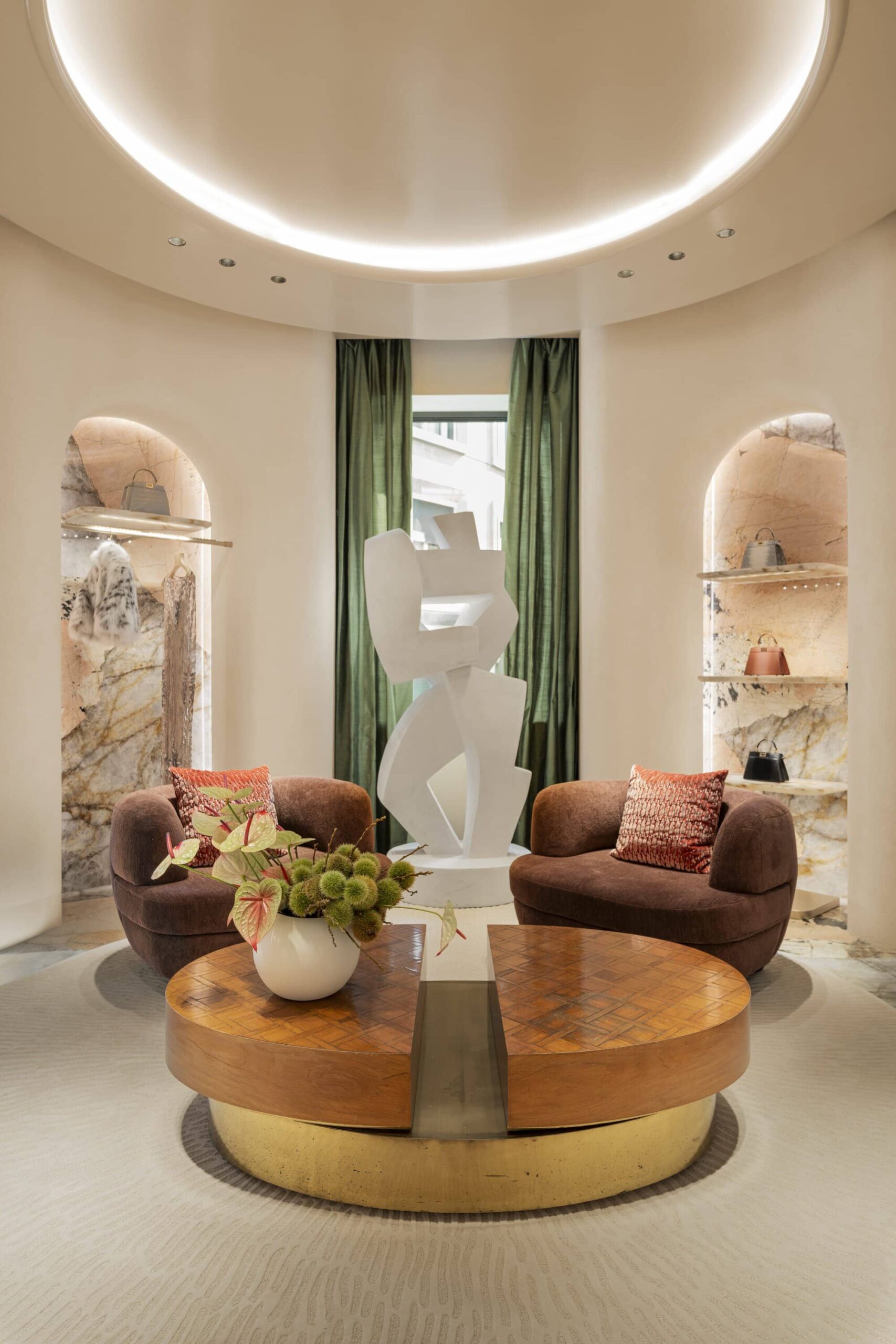
Inside, Fendi’s Architecture Department has created a dialogue between Roman heritage and Milanese modernism. Curved thresholds inspired by fur craftsmanship lead through a sequence of rooms where ancient Roman marbles meet the clean architectural lines associated with Milanese interiors. Restored period elements sit alongside commissioned artworks from Fondazione Officine Saffi, Fondazione Arnaldo Pomodoro and the galleries Mazzoleni and Secci. Materials including travertino, Rosso Lepanto and Breccia Oniciata appear in geometric patterns reminiscent of Roman domus floors.
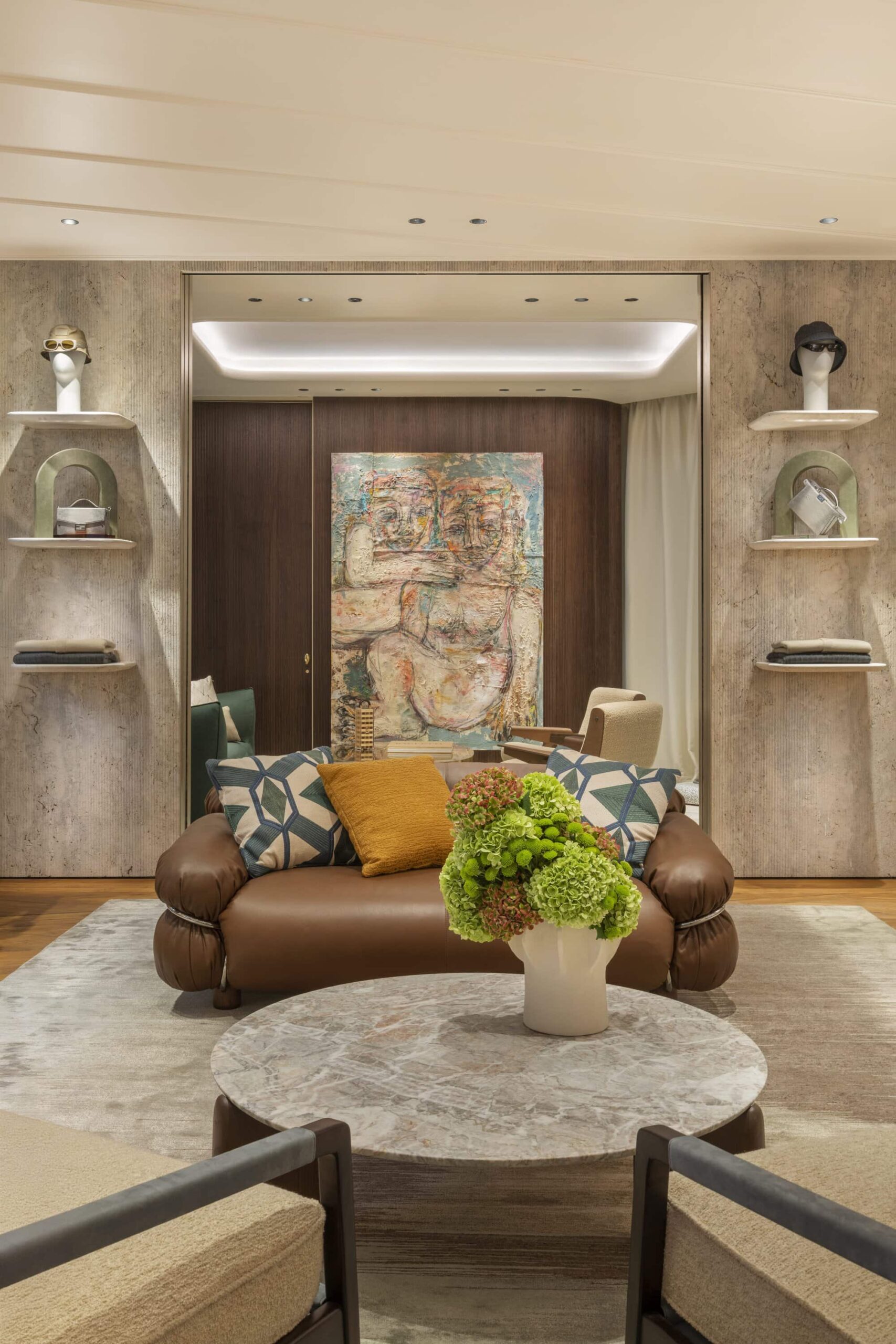
The ground floor introduces the women’s accessories collections within a series of walnut arches and ribbed travertine walls. At the centre of the space, Lancia’s original hexagonal stairwell has been preserved, now paired with pink glass rhombi and a Cuoio Romano leather handrail finished with the maison’s signature Selleria stitching.
On the first floor, men’s and kidswear collections are presented within a more textural environment where travertino silver surfaces, teak parquet and anastilosis inspired displays create rhythm throughout the rooms. A perforated nickel door opens into the men’s VIP salon, while a try-on suite features wallpaper designed by British artist Luke Edward Hall.
The second floor is dedicated to women’s ready to wear, couture and furs. Here the palette softens into lacquered ivory tones and sculptural furnishings, with travertino arches framing the spaces. Two rounded VIP salons, including a High Jewelry room, bring natural light and art into private appointments.
Above, the third floor houses the Fendi Atelier, a working studio where artisans craft and personalise fur and leather pieces. Clients can observe elements of the process while surrounded by marble patterns inspired by opus sectile floors. A Pantheon inspired foyer leads to the Fendi Apartment, a private VIP suite designed for the maison’s most exclusive appointments. Within the space, works by Agostino Bonalumi and Arnaldo Pomodoro sit alongside a Raku crafted bar cabinet, reinforcing the intersection between design, art and craft.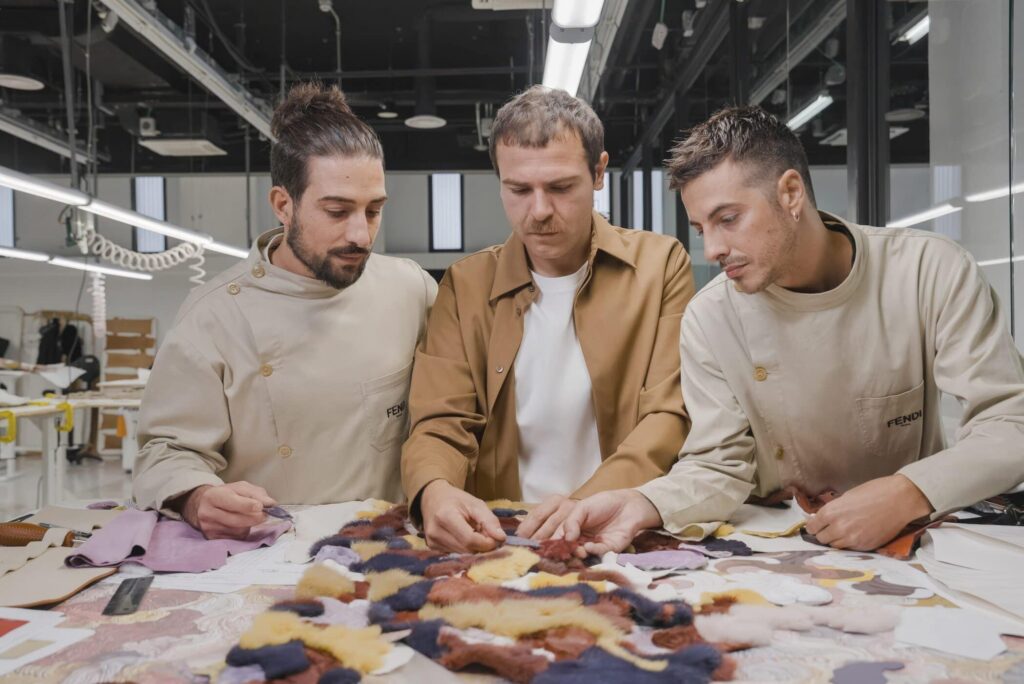
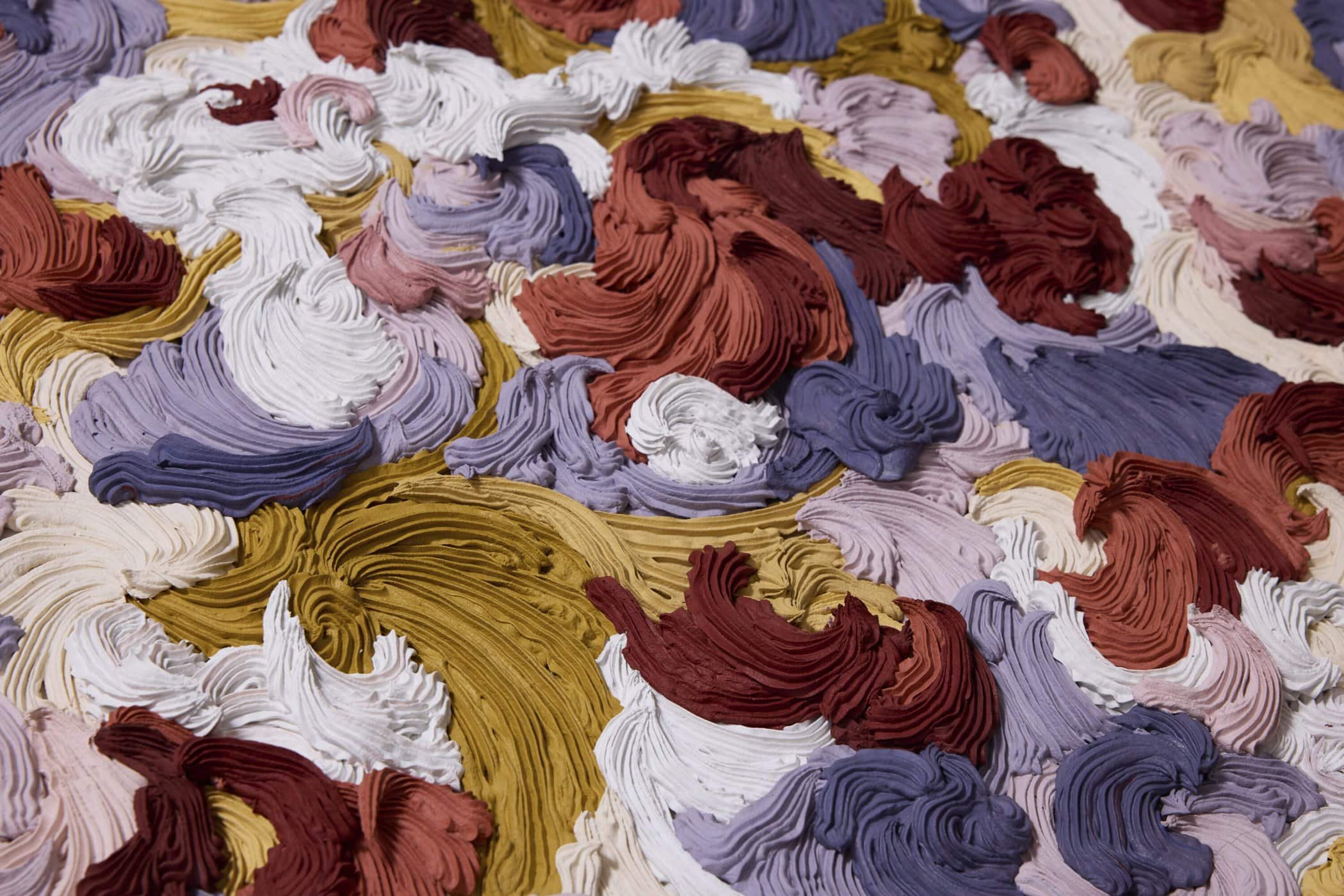
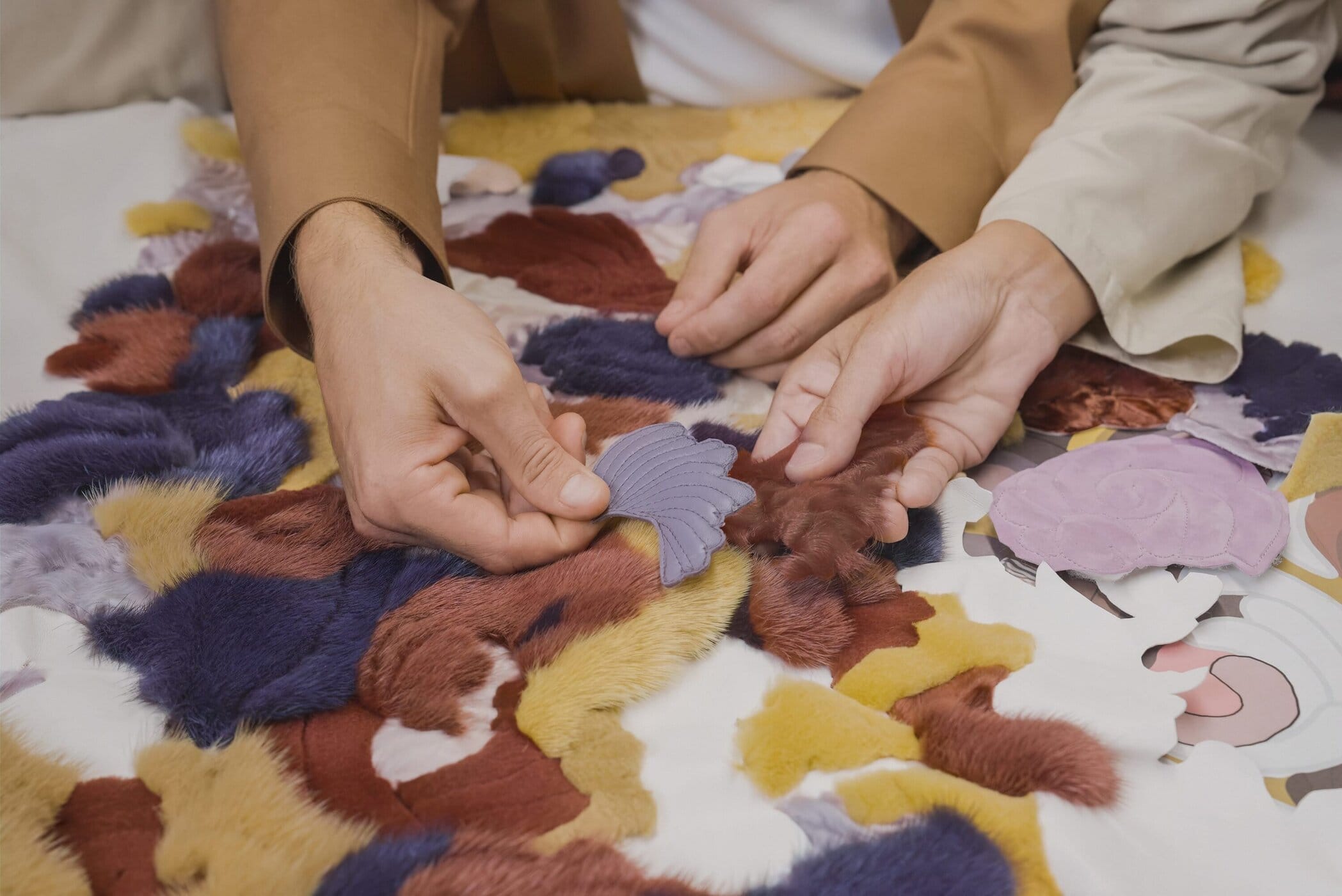
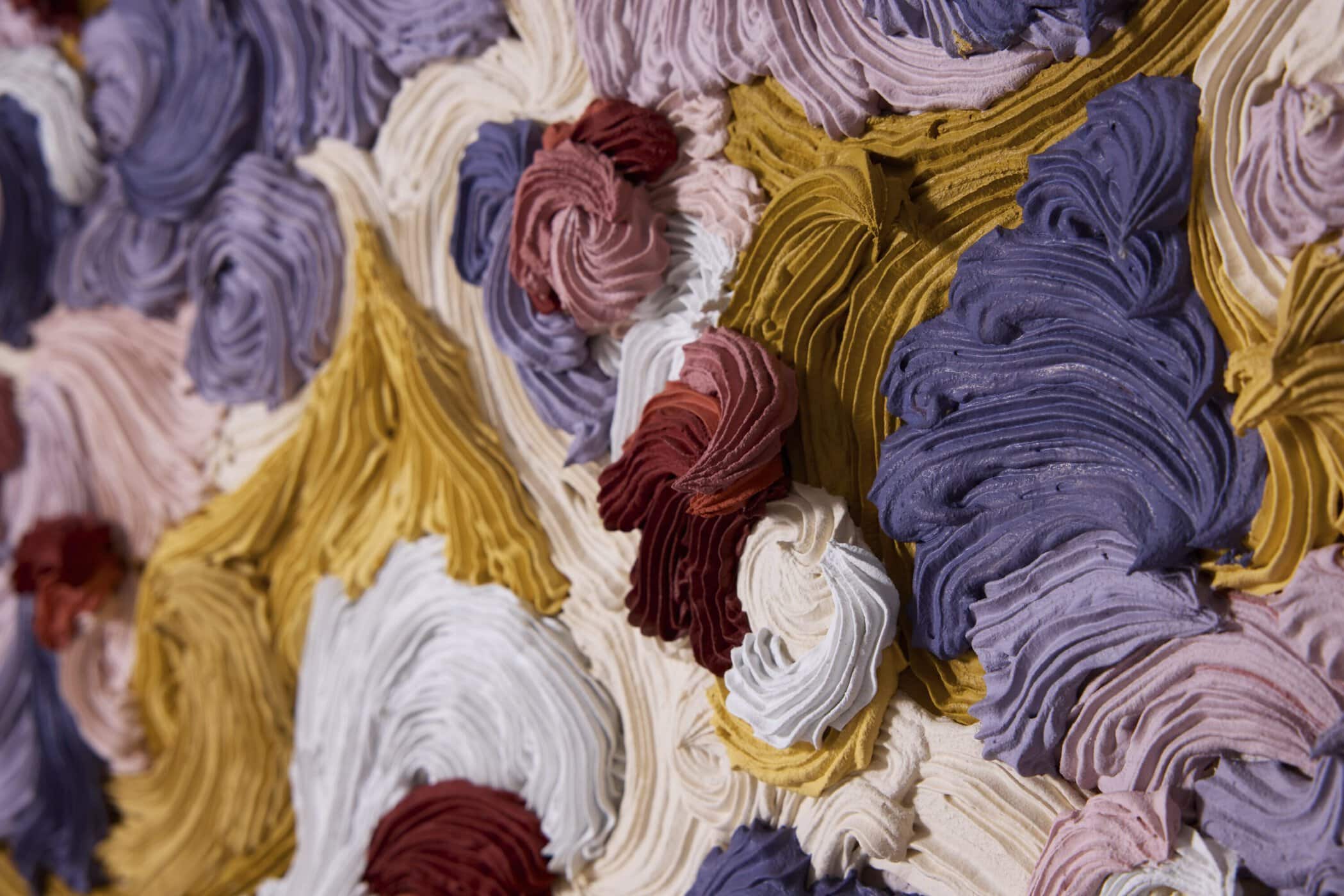
The flagship also introduced Rock the Craft, a cross disciplinary project pairing artist Edoardo Piermattei with Fendi’s leather and fur artisans inside the atelier. Piermattei’s sculptural concrete vaults, created specifically for each floor of the building, have been translated into leather and fur pieces through complex inlay techniques. The collaboration extends into Fendi’s Peekaboo Artists series with a customised white canvas Peekaboo bag displayed in the boutique. A limited number of made to order Peekaboo bags created from archival materials further highlight the maison’s growing focus on circularity.
Months after its debut, Palazzo Fendi Milano has become more than a commemorative project. In a city where fashion houses continue to invest heavily in architectural flagships, the space stands out for how it integrates craftsmanship into the retail experience itself. By combining a century of female leadership with a living atelier and site specific art, the Milan address reflects how Fendi is translating its heritage into a contemporary cultural destination on Via Montenapoleone.
Read More Articles