Esteban Ocon
Driven By More
From a childhood spent above a mechanic’s garage to the unforgiving theatre of Formula One, Esteban Ocon’s journey has been defined by sacrifice and stubborn belief.
Now, with a new season approaching, he remains driven not by what he has achieved, but by what still feels unfinished.
Seasons end abruptly, celebrations are brief, and attention shifts almost immediately to what comes next. For Esteban Ocon, there has been little time to linger on what has passed. The previous campaign stretched late into the calendar, compressing the off-season into a narrow window that felt less like a break and more like a brief pause before the cycle resumed. In a sport that rarely allows drivers to gather themselves, readiness becomes less about rest and more about resilience.
There is, however, a familiarity to the rhythm. Esteban has lived inside it long enough to understand that each year begins with the same uncertainty – a reset disguised as a continuation. Preparation unfolds against a backdrop that feels like two seasons overlapping, one barely concluded before the next demands attention, yet the ambiguity is part of the attraction. No one truly knows where they stand until the cars return to the track.
“I’m feeling good,” says Esteban. “We’ve prepared well during the winter. We finished the season so late, and obviously we are starting to test early in January already, but it’s exciting times, because we’re always starting from scratch. We don’t know who’s going to be competitive, who’s not going to be competitive. We are praying that it’s going to work well this year, but we’ll give our best to deliver every single time.”
The pragmatism in his voice reflects experience. Esteban has been part of Formula One long enough to recognise that confidence is earned in increments – through preparation, persistence, and the quiet accumulation of marginal gains that seem to define success in this sport. Yet beneath that realism sits something more instinctive: an enduring sense of wonder at the life he now leads, a career built on a dream that once felt impossibly distant.
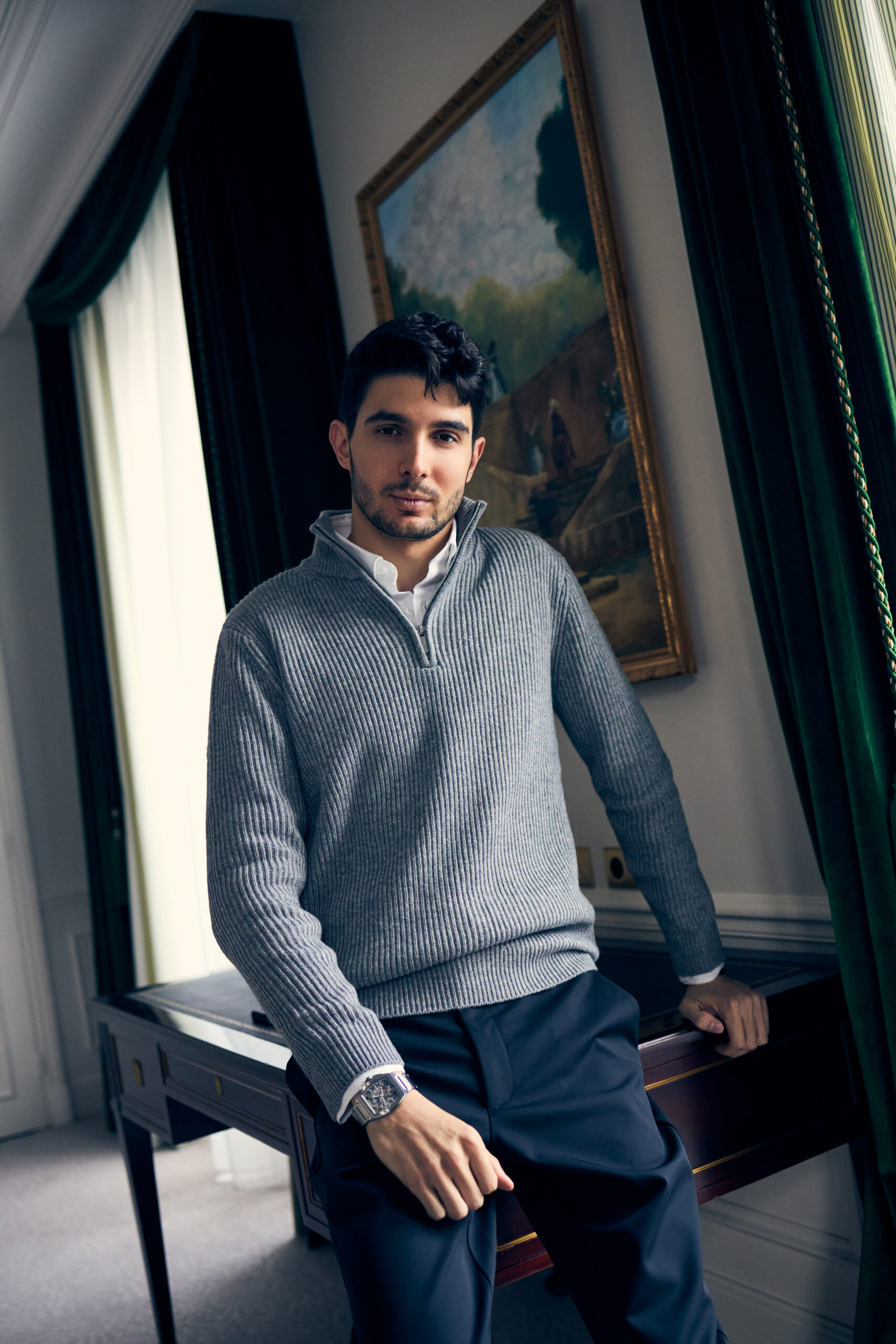
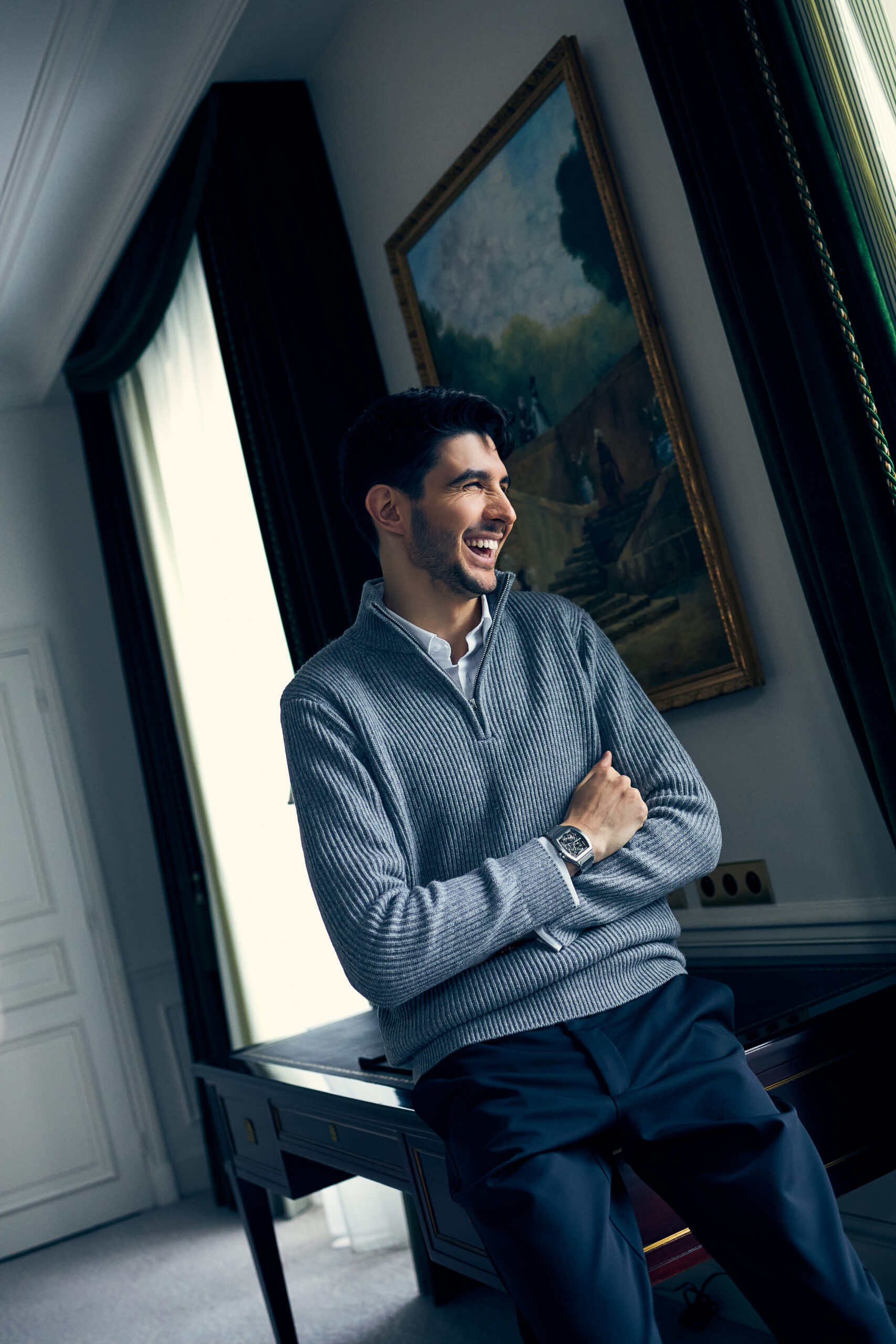
“Being in Formula One now it’s very special,” he says. “I’ve been dreaming of being in that position forever. Living my dream as a job, it’s a privileged position, and I can’t be more thankful for that. It’s amazing to be racing the fastest cars in the world, around the best circuits in the world. I’m really happy to be racing, and I’m enjoying every single moment of that. But I don’t feel like I’ve achieved what I want to achieve. I’ve had some good results, but I want more. You always want to have more success, and that’s what I’m chasing.”
That restlessness – the refusal to treat arrival as completion – is inseparable from the story of how he reached the grid in the first place. His ascent remains one of the most compelling in modern motorsport, defined not by privilege but by sacrifice. Long before podiums and television cameras, there was a leap of faith taken by his family, a willingness to trade certainty for possibility.
To fund his early racing career, his parents made a decision that would reshape the family’s entire way of life. They sold their home and his father’s garage – the business that sustained them – and moved into a caravan, travelling from circuit to circuit across Europe for three years so their son could compete.
“It was a very big risk for sure back then – we didn’t know if it was going to pay off,” says Esteban. “I think my parents really believed in me and knew that I had the capability to be achieving what I wanted to achieve, and being in Formula One one day. We did everything we could, and without them, I would not be where I am today now. I think we never gave up, even if people said otherwise. I think if you give yourself the chance, and if you give it everything, it doesn’t matter where you come from, you can do it. It’s a good life lesson.”
If that chapter instilled resilience, the global nature of Formula One broadened his perspective. Moving beyond domestic competition meant navigating unfamiliar cultures, languages, and expectations – life experiences that demanded adaptability as much as speed. Over time, the constant movement fostered a worldview shaped by diversity rather than defined by borders.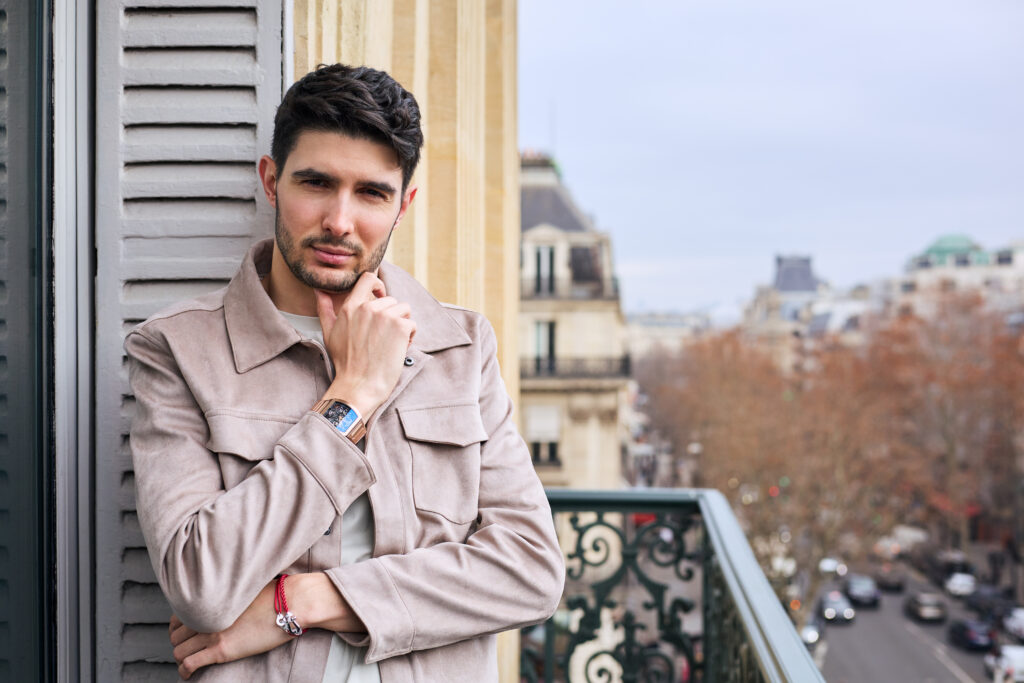
“When you start traveling in the world, meeting different people from different cultures, you open your eyes a lot more,” he says. “You need to start speaking in English, in Italian, in Spanish… you get more detailed and closer to people when you learn these kinds of languages.”
Inside the cockpit, however, perspective yields to precision. Formula One remains a discipline where bravery must coexist with calculation, where every decision is made at speeds that leave no margin for hesitation. Drivers learn to acknowledge the danger without allowing it to intrude – a balance that separates instinct from doubt.
“I think you always have to keep it in the back of your mind – you know that it is a risky sport,” says Esteban.”Motorsport is dangerous. This is something that you know – that we all know. But if you start to be scared while you’re driving, I think you need to stop. It’s not a place for you anymore.”
What ultimately outweighs the risk is the sensation itself – the physical immediacy of acceleration, the almost surreal experience of controlling a machine operating at the limits of possibility. Even after years at the highest level, the return to full power after time away retains an intensity that defies familiarity.
“It is incredible,” he says.
“When you go full power for the first time, it’s something you will never experience anywhere else. So it is extremely special.”
That connection to machinery predates Formula One entirely. As a child, Esteban grew up above his father’s garage, where dismantled engines and half-finished repairs formed the backdrop to everyday life. Fascination came first, competition later – a progression that now feels almost inevitable in hindsight.
“As soon as there was an engine starting, I wanted to run to the car to hear how it sounded, to look at the tires, to smell the fuel,” says Esteban. “I’m pretty much still addicted to all of the same things.”
Today, that early obsession carries him across continents to circuits that have become both workplace and proving ground. Among them, a select few still evoke something deeper – tracks where precision and courage are rewarded in equal measure, and where the driver’s influence can still tip the balance.


“Budapest, Suzuka and probably Monaco – the old school ones – they really give you that thrill and rewards when you take the risk and when you are wanting to deliver.”
Yet for all the glamour attached to Formula One’s global stage, his motivation remains disarmingly personal. Achievements to date are viewed not as conclusions but as markers along a longer journey – evidence of progress rather than fulfilment.
“I don’t think I’ve achieved enough yet,” he says. “I want to achieve much more. I want to win more races. Until I reach my goal, I’m not going to be stopping anytime soon.”
In the end, Esteban Ocon’s career is defined not by a single breakthrough but by continuity – a sustained refusal to allow circumstances to dictate ambition. As the new season draws into focus, the familiar sense of anticipation returns with it. In just a matter of days, the paddock will reconvene on the other side of the world, where the 2026 Formula One season begins in earnest at the Australian Grand Prix at Albert Park in Melbourne. Momentum, once paused, will surge back into life and Esteban, characteristically, will be ready to chase it.