Dominik Szoboszlai
The Architecture of Ambition
Dominik Szoboszlai has never been short on ambition.
From Hungary to Liverpool, from prodigy to Premier League winner, his story has been shaped by discipline, sacrifice and an unshakeable belief in what might be possible. For Sports World, the Liverpool midfielder reflects on family, football, fatherhood, fashion and the dreams still driving him forward.
Dominik Szoboszlai carries himself with the quiet assurance of someone who has already lived a great deal in a short space of time. At 25, his journey has taken him from Hungary to Austria, Germany and now England, each step bringing with it a new level of expectation, scrutiny and opportunity. Yet, for all he has achieved, there is little sense of satisfaction in the final sense. More a feeling that this is still only part of the story.
He is captain of his country, a Premier League winner with Liverpool and one of the most recognisable Hungarian footballers of his generation. His name now travels far beyond the pitch, attached not only to performances and trophies, but to style, image and a growing sense of influence. Still, beneath the attention, there remains something grounded at the centre of it all.
He speaks with pride about where he is from, warmth about the life he has built in England and tenderness when the conversation turns to fatherhood. Asked how life is, he begins with a smile.
“I’m very good,” says Dominik. “I’m enjoying my time in England with this beautiful weather. I like being here. I like the city, I like the country, and of course, the most important thing is the football part. That’s what makes me happy as well.”
For Dominik and his family, England has become home. It is where he has adapted, settled and grown, both as a footballer and as a person. It is also where he has experienced two defining moments: one professional, the other deeply personal.
“I think the best things that have happened to me in England are that my daughter was born and I won the Premier League.”
It is a line that says plenty about the balance of his life now. In elite football, everything is immediate. Every touch is judged, every result dissected, every emotion magnified. Matches are clipped, replayed, analysed and debated long after the final whistle. For a player operating at Liverpool’s level, there is rarely much room to switch off.
Fatherhood, though, has altered the way he carries those moments home.
“Yeah, it’s very good [becoming a father] – it’s completely different from one day to another,” he says. “Suddenly, there is a person who is way more important than anyone else, and you just focus on taking care of her and your family. It’s a nice feeling.
“Before, after a bad game, I would be really angry for maybe a longer period. But now I just need to go home and realise what is really the most important thing.”
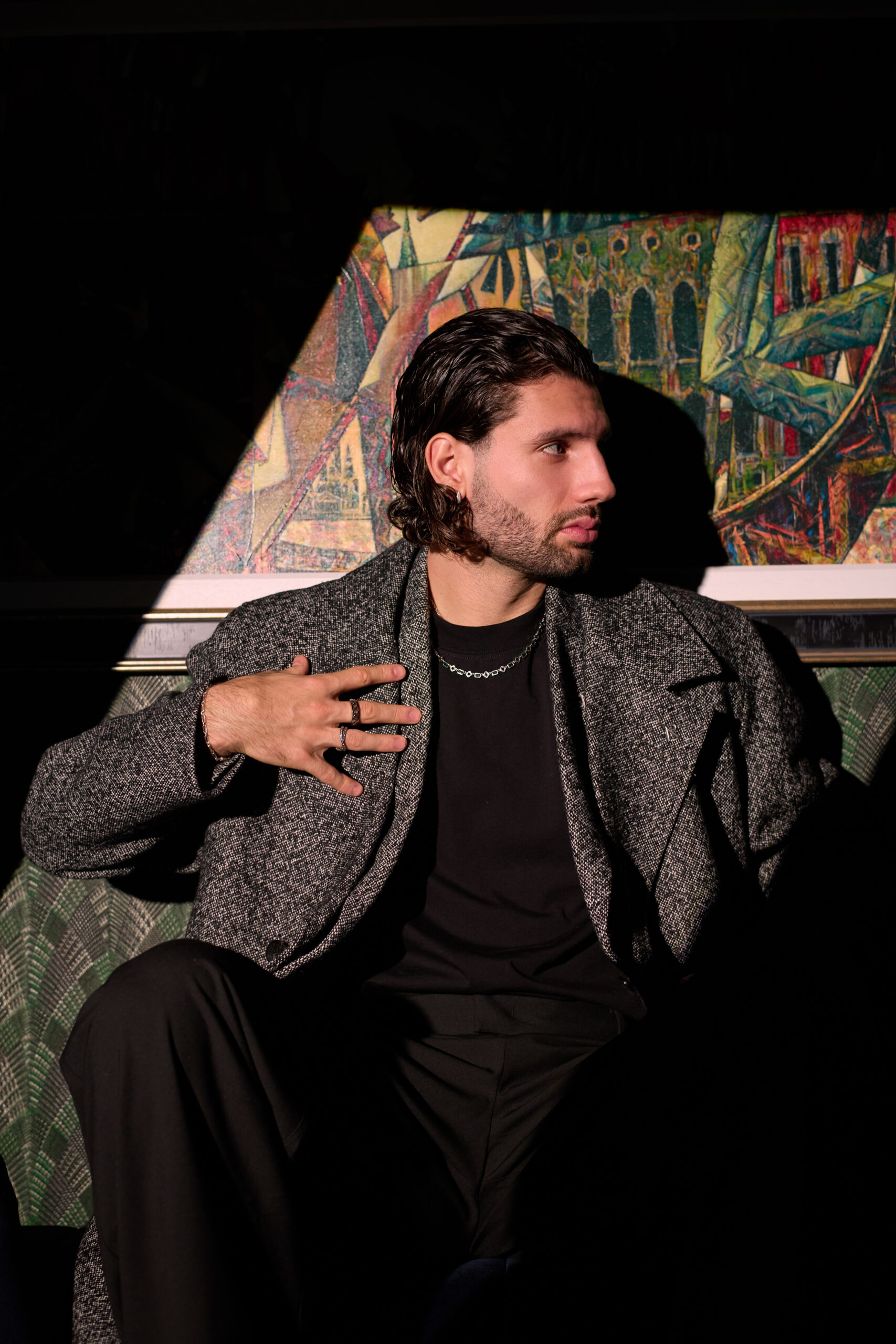

That perspective has not dulled his ambition. If anything, it appears to have sharpened it. Dominik does not speak like a player content simply to have reached the top level. He speaks like someone still measuring himself against what remains ahead.
There is also a responsibility attached to his success. As a Hungarian footballer competing at the summit of the European game, he understands what his visibility represents. His career has become a kind of evidence: proof for young players from smaller footballing nations that the distance to the biggest stages is not as vast as it might appear.
“I like being Hungarian, and I also try to show all the Hungarian kids – or people – that everything is possible if you really put in the work and really believe in yourself,” he says. “I’ve sacrificed everything until now. There are a lot of things that I would still like to achieve, and I still need to work hard for this kind of stuff.”
Sacrifice, in Dominik’s telling, is not romanticised. It is presented almost as a fact of life. This is what it takes. This is what he did. This is what anyone hoping to follow a similar path has to understand.
“If you really want to achieve what your dream is, then you have to sacrifice everything.”
“You have to live only for football and take care of yourself, really focusing on those things that help you go forward. For sure, there are going to be setbacks where you have to take one step back, or maybe it’s going to be a hard time.
“But if you overcome those times, then you’re going to become stronger, even mentally. I think that’s a really important part of it: to be mentally strong. It’s not enough only to be good on the pitch. You have to be really, really strong mentally.”
That mentality has underpinned every stage of his rise. From his early years in Hungary to Red Bull Salzburg, RB Leipzig and eventually Liverpool, Dominik’s career has moved quickly, but never accidentally. Talent opened the door, but discipline kept him moving through it.
His transfer to Liverpool, one of the defining moves of his career, arrived with striking speed. In his version of events, there was no drawn-out hesitation, no uncertainty, no need for persuasion.
“My transfer to Liverpool happened in maybe two days,” he says. “‘Yes, we would like to have you.’ ‘Yes, I want to come here.’ Done. Finished. It was this quick. When I signed my contract and put the Liverpool jersey on, it was like: ‘ok, I’m on a good way to achieving my dreams.”
For many players, Liverpool is not simply a club. It is an arena of expectation. The shirt carries history, pressure and noise. Dominik understood that immediately, but he also saw it as confirmation that the path he had committed himself to was leading somewhere meaningful.
Yet football, for him, is no longer the whole picture. Increasingly, Dominik has emerged as one of the game’s more confident dressers, a player with an instinctive feel for clothes and an ease in front of the camera. His style does not feel overly calculated. It is expressive, sometimes bold, but always rooted in personal conviction.
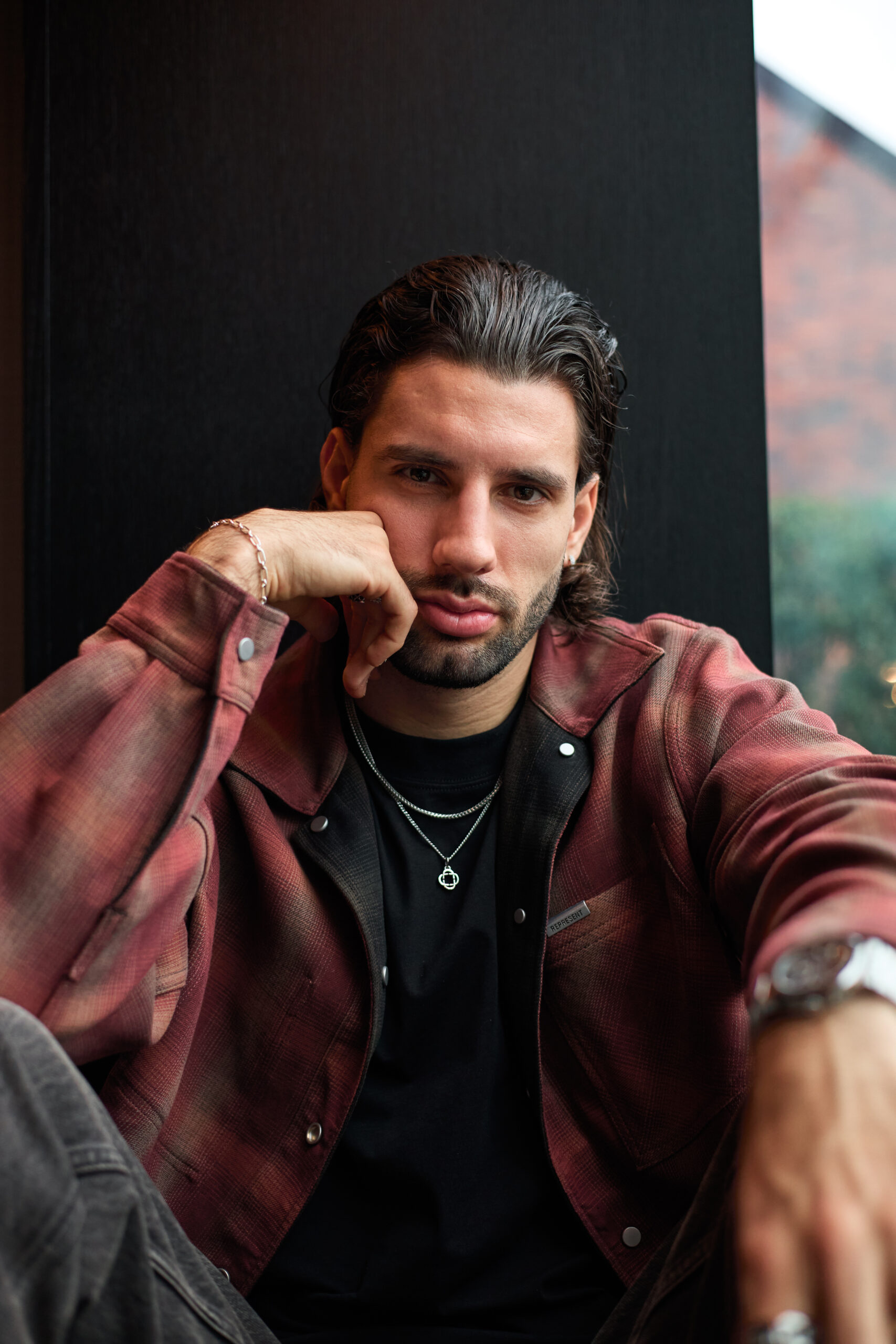

“My own personal style? I think I’m open to everything,” he says. “I can wear really anything that comes in front of me and, if I say I like it, then I like it. Maybe a couple of people would say, ‘This is too much, this is too much.’ But actually, it’s never too much in fashion. I think if you’re just feeling it, then it’s fine. You can wear it.
“I always loved fashion, but I wasn’t really into it. More like four years ago, I started to be really into it and started to focus on this stuff. Then I felt like I was really enjoying it. To look good, to wear nice clothes – it makes me happy.”
There is a freedom in the way he talks about fashion. No rigid rulebook, no attempt to intellectualise it beyond what it is. Clothes, for Dominik, are another expression of feeling. If it works for him, it works.
That confidence came into sharp focus through his collaboration with the Four Seasons Hotel in Budapest, a cinematic project built around tailoring, elegance and classic cars. The concept placed Dominik in a world of old-school glamour, leaning into a polished, almost Bond-like image that felt both playful and natural.
“It was just an idea between us and them,” says Dominik. “Then the guys sat down and came up with the idea that maybe I could be the next James Bond. I liked the idea, I really liked the fit, I liked the stuff, I liked the car a lot. We just made it, and in the end it came out really well.”
It is easy to understand the appeal. Modern footballers are no longer defined solely by what they do on the pitch. The most compelling figures build worlds around themselves: through fashion, business, culture, philanthropy and personal taste. Dominik is aware of that landscape, though he seems in no rush to force anything before its time.
He admires the way certain footballers have created identities that endure beyond their playing careers. David Beckham remains the obvious reference point: a footballer whose influence evolved into something broader, more global and more permanent.
“As you see now – of course, it’s another level – but you see Beckham [who] doesn’t play football anymore and still has his stuff. I love fashion and I love football, so actually both could happen. But I have to build myself up to this point.”
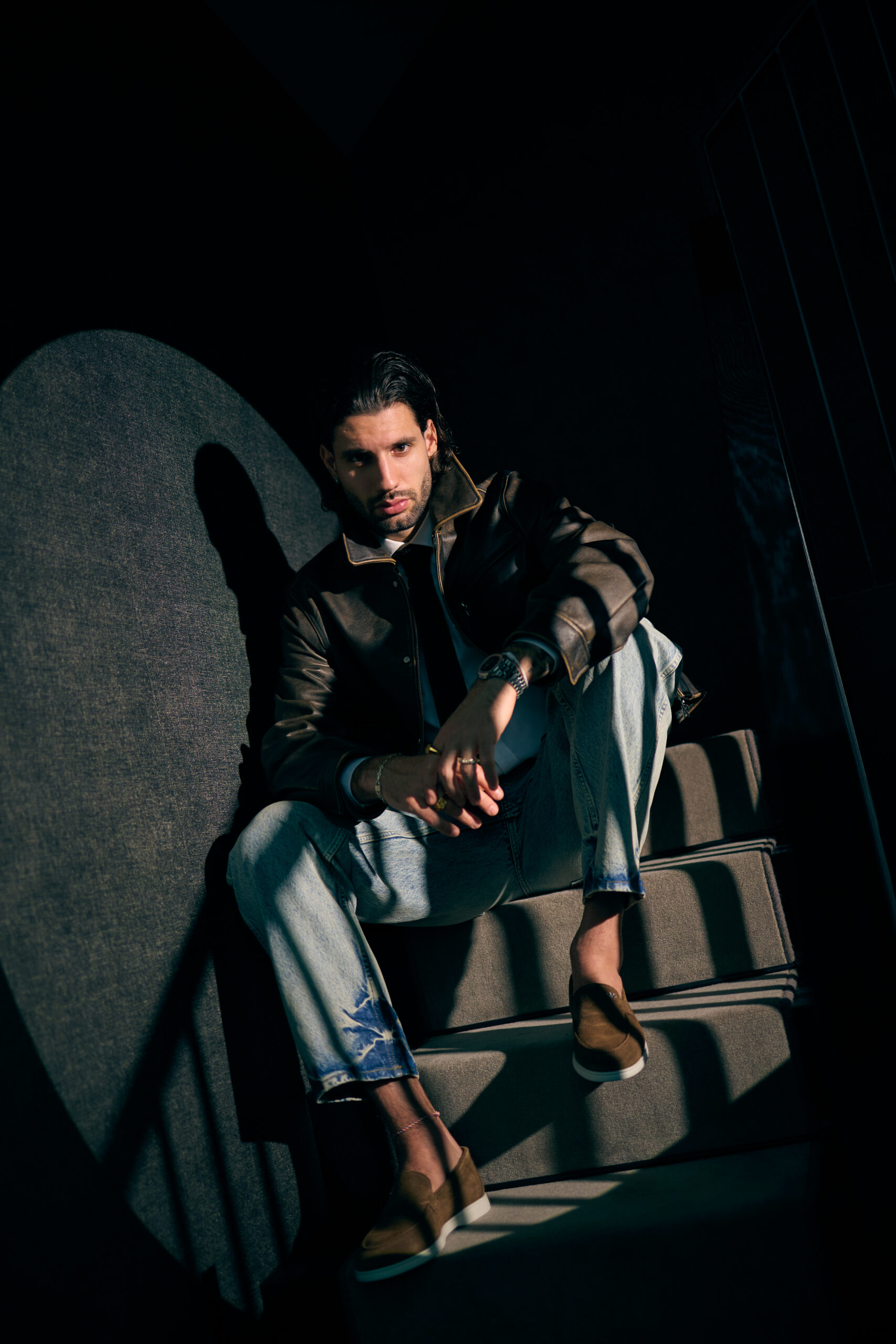

That phrase – build myself up – feels particularly revealing. Dominik is not speaking about reinvention so much as construction. The football career remains the foundation, but around it he is beginning to assemble something wider: a public identity that reflects his interests, his heritage and the way he sees himself.
For now, though, the priorities remain clear. There are trophies to chase, standards to meet and history still to be written. At Liverpool, he wants to return to the very top. With Hungary, the dream is even more emotionally charged. “I would like to win the Champions League, for sure,” he admits.
“I’ve said it before: I owe my country a World Cup.”
“I still owe them this one, so I will focus on that a lot. Club-wise, I would like to be at the top again with Liverpool – fighting for the Premier League again, fighting for the Champions League and winning the Champions League. That’s my biggest dream.”
It is a bold ambition, but then Dominik has never seemed especially interested in thinking small. His career has been built on the belief that limits are there to be challenged, whether those limits are geographical, mental or professional. From Hungary to Anfield, the thread has remained the same: work, sacrifice, belief, repeat.
And yet, beneath the ambition, beneath the pressure, beneath the image of a player carrying the hopes of club and country with an ease that belies his age, there is something strikingly simple guiding him.
Not noise. Not status. Not even the glamour that now surrounds him.
“Finding the stuff that makes me happy,” he says, “and just doing that.”